
Black History profile: Debbie Allen, ‘born to dance’
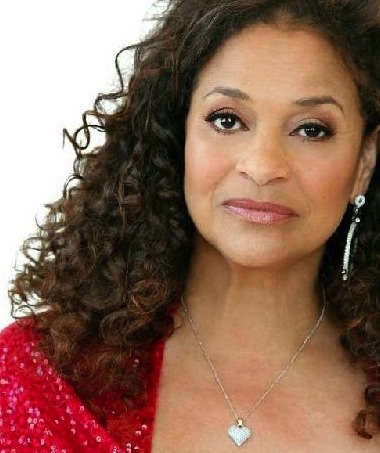
“To dance is to know real expression. To dance is to master time and space. Dance is the universal language. It is that connection to creativity that cannot be superseded by anything else.” – Debbie Allen
LOS ANGELES – To say that dance is in Debbie Allen’s DNA seems the height of understatement. The longtime actress, performer and choreographer has dreamt of dancing on air ever since she was a bright-eyed 4-year-old in her native Houston, watching Saturday morning musicals and visualizing herself in a leading role.
“I would see myself in those costumes and on that stage. I petitioned my mom to get me in the best classes that I could get,” says Allen, now 66. “Some people are born to dance. I think I was one of those people.”
Years later, the world would surely agree, as Allen has become among the nation’s leading purveyors of dance and choreography, earning three Emmy Awards and one Tony Award and choreographing the annual Academy Awards show a record 10 times.
This February, the Wave is profiling some of the local heroes in black history. This week’s subject is actress-dancer-director-choreographer Debbie Allen.
Despite Allen’s many accomplishments, however, hers was no easy road.
Allen grew up in the segregated 1950s and 1960s, a time when few opportunities existed for blacks, especially in the performing arts.
“There was such a racial separation in this country, there was such a divide. I couldn’t even go to ballet class,” she recalled during a recent interview. “Everything was segregated. I grew up seeing “Whites Only” water fountains and restrooms.”
To escape the oppression, Allen’s mother, Vivian, packed up Debbie and her sister (actress Phylicia Rashad) and moved the family to Mexico City. For Debbie, the move was transformative.
“All of a sudden we could go to any restaurant. We could go to any movie. I could go to dance class,” she recalled. “Here we were embraced by a different culture of people whose language we didn’t even know at the time, that were saying it was okay that we could be with them, we could do [anything].”
When the family returned to Houston about a year later, “the civil rights movement was taking this country on like brush fire,” Allen recalled. “It was also a time where you really had to know that you had to have courage. We were not afraid because we knew that this was the only way to make change. So I learned that early on, not to be afraid.”
She would suffer a crushing blow years later when she failed to get accepted into the North Carolina School of the Arts. That rejection, however, opened a door to the next phase of Allen’s life at historically black Howard University.
“I would not have changed that path for anything in this world,” she said, “because it was at Howard University that I really morphed into a butterfly.”
While on break one summer, Allen got an opportunity to train with the prestigious Alvin Ailey Dance Theater and the experience “changed my whole perspective about dance.”
“I had always wanted to be a ballerina until I met the Ailey Company,” she said. “Then it was like ‘Wow, this is where I belong.’ When you find out where you belong, that’s half the battle right there.”
She graduated cum laude from Howard in 1971 with a bachelor’s degree in fine arts in classical Greek literature, speech and theater – an education and experience she would later use to inform her production and direction of the TV show “A Different World.”
After graduation, Allen continued to pursue a career in dance before landing a small role in “Roots: The Next Generation,” followed by a starring role in a Broadway revival of “West Side Story.” Her performance earned a Tony Award nomination and critical acclaim that led to a role as a dance instructor in the breakout movie, “Fame.”
That film – about a performing arts school in New York – became a cult classic, winning several Academy Awards and eventually evolved into a successful television series, in which Allen also co-starred. For her role as achoreographer on the show, Debbie earned three Emmy Awards for choreography.
In 1986, Allen won a Tony for her role in Bob Fosse’s revival of the musical, “Sweet Charity.” She spread her wings even more in 1997 when she produced the Oscar-nominated Steven Spielberg film “Amistad” and directed the African American production of Tennessee Williams’ “Cat on a Hot Tin Roof,” starring sister Phylicia Rashad. She also has a recurring role on and has directed several episodes of ABC’s long-running hit series “Grey’s Anatomy.”
And if that wasn’t enough, Allen chose to share her comprehensive knowledge and experience with the next generation of dancers and performers when she opened the Debbie Allen Dance Academy in South Los Angeles in 2001.
Her latest venture is “Freeze Frame,” a multimedia show that addresses the devastating impact of gun violence in America through dance, theater, film, art and music.
When asked about her fearless approach to success, Allen credits growing up in the civil rights movement of the 1960s.
“We were watching a lot of bad things happen, but we knew — just like birth pains, you got to go through pain to get to that beautiful child,” she said. “Fear is the one thing that can defeat anybody.”
Today, Allen lives in Los Angeles with her husband, former Los Angeles Laker Norm Nixon. The couple has two children, Vivian Nixon and Norman Nixon Jr.