
Tuskegee Airmen event lauds 75 years of service
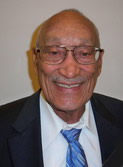
LOS ANGELES — He left Arkansas to make a name for himself and get out from under his father’s shadow.
Little did Jerry Hodges know that his journey would land him squarely in the pages of history, turning him into a living legend as a member of the Tuskegee Airmen.
Although World War II ended before Hodges finished his training as an Army pilot and he never flew as a member of the famed group, he has remained active in programs associated with the Tuskegee Airmen.
For 14 years, he was chairman and president of the Tuskegee Airman Scholarship Fund, before stepping down in 2013 when he was 88.
He plans to be in attendance Dec. 2 when the scholarship celebrates the 75th anniversary of the Tuskegee Airmen at Bob Hope Patriotic Hall in Los Angeles.
He will be among his fellow original airmen, as well as Olympians, local, state and national dignitaries and more, as they announce the winners of the past year’s scholarship application process.
The Tuskegee Airmen Scholarship Fund was founded in 1978 by original Tuskegee airmen, and over the years has awarded 1,300 scholarships worth nearly $2 million.
This year marks the first time the organization will be providing a STEM (science, technology, engineering and math) scholarship, through funding from Edison International and a private donor. They will provide $3,000 for the winner, twice as much as the fund has previously been able to award.

Former Tuskegee Airman Jerry Hodges will be in attendance at the Tuskegee Airman Scholarship Fund’s celebration of the 75th anniversary of the Airmen Dec. 2. (Courtesy photo)
Hodges said he always had an interest in flying. As a teenager, he read stories about Navy pilots and the gold wings they wore. He decided he wanted to wear those wings, too.
“I had no idea that I could not qualify because I was the wrong color,” Hodges said.
He graduated from college in Virginia and entered the military there in June 1944. Hodges decided to volunteer for the Army Air Corps program, taking all the necessary physical and psychological exams, but didn’t go anywhere for two months.
He would later find out the military program didn’t know what to do with him because he was black.
They eventually sent him to Keesler Field in Mississippi for basic training, where he continued to wait. Finally, when three other young black men arrived, they were transferred to the Tuskegee Air Base in Alabama to train as a class of four pre-aviation cadets. Most classes had 60 or 70 cadets at the time.
After basic training, the four cadets transferred to the nearby Tuskegee Institute for primary training where they learned to fly PT-17 and PT-13 military training aircrafts. They would return to the air base for training in the AT-6 and then the twin-engine B-25 bomber.
They were training to go to the Pacific to drop bombs on Japan in World War II. Hodges’ team put in 30 to 35 hours per week, clocking more than 500 hours during their two-year training period.
Hodges would graduate as a second lieutenant in September 1945, but by then the war was over.
“We were thinking about becoming proficient to go over there and drop bombs,” Hodges said. “We were put through the hoops to accomplish what they wanted us to do.”
After training, Hodges transferred to Lockbourne Air Base in Columbus, Ohio in July 1946, where he was assigned to the 617th Bomber Squadron. He served under Col. Benjamin O. Davis Jr., who would later become the first black general in the Air Force.
Despite all the missions he flew, Hodges never saw combat, although he met many of the other original Tuskegee Airmen during his time at Lockbourne, some of whom returned from missions overseas and shared stories with those who were not deployed.
Overall, the Tuskegee Airmen earned 150 Distinguished Flying Crosses in the Army Air Corps, 744 Air Medals, 31 Purple Hearts, and 14 Bronze Stars.
The Air Corps started cutting back, and after serving at Lockbourne, Hodges decided he’d make a career of the military as a statistical control officer, keeping track of the numbers of men on his base, maintenance records and more. In December 1946 he decided to go back to school to study accounting and finance.
He graduated from USC in 1947, and worked as a certified public accountant, fully retiring only a few years ago.
His involvement with the scholarship fund is all about making sure young black men graduating from high school receive the opportunity to go to college. The fund generally provides $1,500 per selected student. Hodges was moved to take part in the organization after hearing a speech.
“Years ago I heard a lecture by the president of Morehouse College,” Hodges said. “He gave stats on young black men, and he said that the young black male student would become extinct unless we do something about it.”
Tickets for the December 2nd celebration are available up until the day of the event, and cost $75 online at . For more information about the scholarship fund, visit www.taisf.org.